
Changing colors in crochet is easy once you know where to introduce the new yarn. The trick to getting a neat, seamless color change is to switch colors on the final yarn over of the stitch before you want the new color to begin.
This technique works when changing colors within a row or round and helps create a clean transition without an awkward color shift between stitches. I’ll show you how to change colors in both single crochet and double crochet using the step-by-step photos below.
I’m using my Little Boy Blue Blanket Pattern for the examples here, but you can use this same technique for Fair Isle crochet and other colorwork projects, including my Fair Isle Snowflake Christmas Stocking Crochet Pattern.
If you need to change colors at the beginning of a new row or round instead, try my Standing Stitches tutorial. Standing stitches are a great way to introduce a new color without the telltale beginning chain.
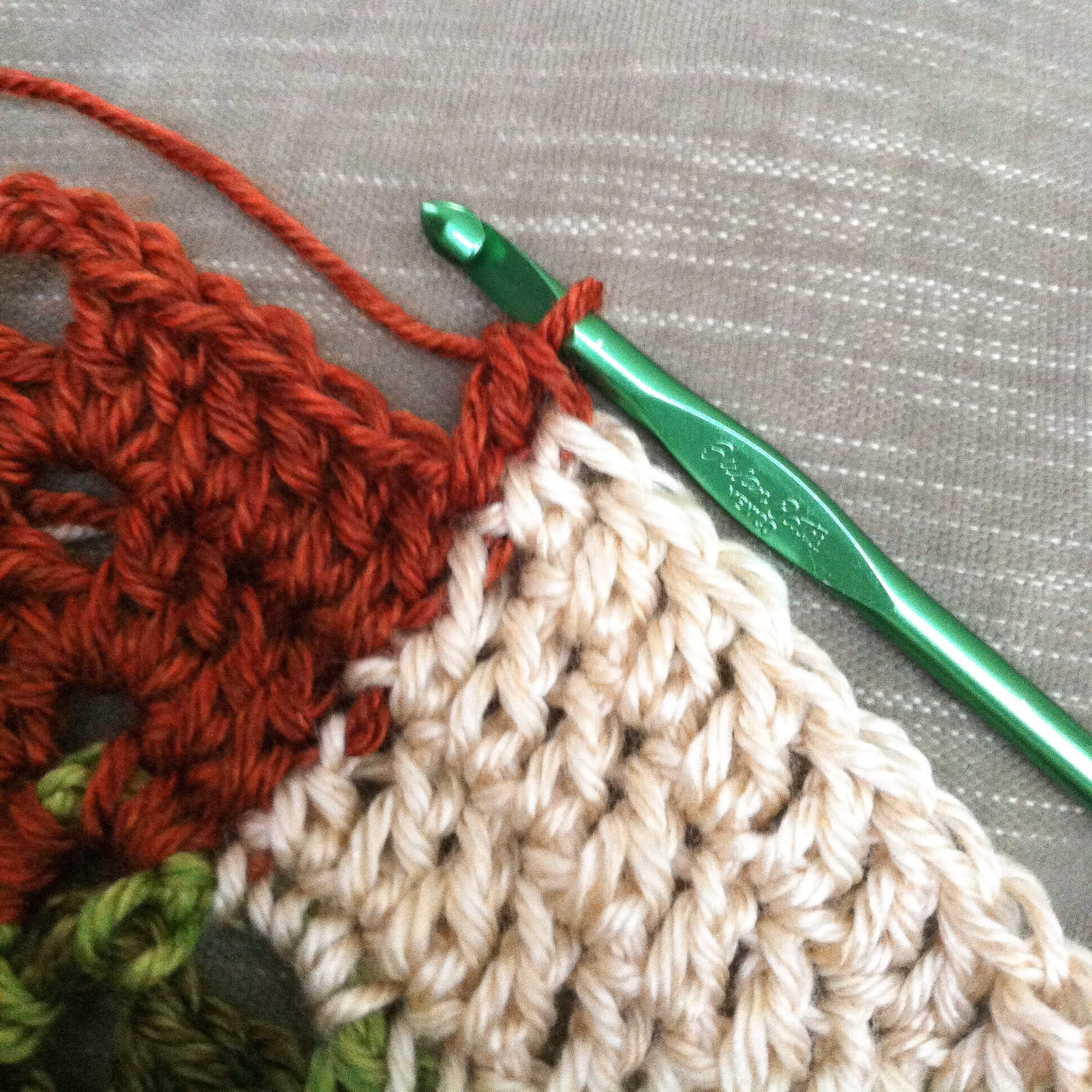
How to Change Colors in Crochet
For a neat color change, begin the last stitch in your current color as usual, but complete the final yarn over with your new color. Continue crocheting with the new color as directed in your pattern.
Let’s use some photos to make this easier…
How to Change Colors in Single Crochet
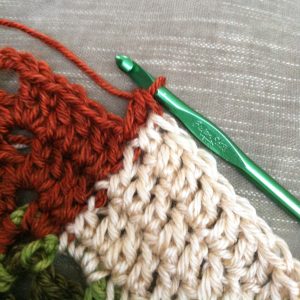
For this project, I have worked my round so far in a cream color and am ready to switch over to another color. For my last stitch with the cream, I would start my single crochet as usual … insert hook where indicated, yarn over and pull up a loop … but for that final yarn over of my stitch, I yarn over and pull the next color through the loops to complete my single crochet. Now just continue with that next color as indicated in the pattern.
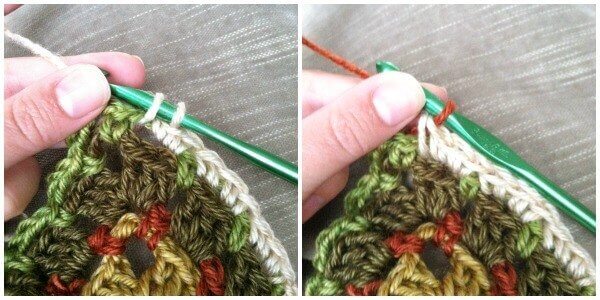
The color change is nice and neat …
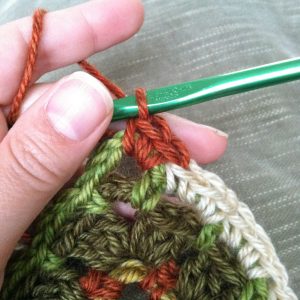
How to Change Colors in Double Crochet
The same technique works for taller stitches, too. The new color is again introduced on the final yarn over of the stitch. In this case, I have worked my round in double crochets and am at the stitch before the next color is to start. I would start my double crochet as usual … yarn over and insert where indicated, yarn over and pull up a loop, yarn over and pull through 2 loops … but for that final yarn over of my stitch, I yarn over and pull the next color through the loops to complete my double crochet.
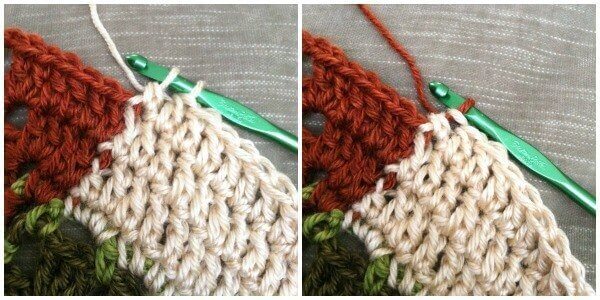
Again, a nice and neat color change …
Should You Carry or Cut the Yarn?
If you’ll be switching back to the first color again soon, you can carry the unused yarn across the row and crochet over it as you work. If you’re finished with the color or won’t need it again for quite a while, fasten it off and weave in the end instead.
So, what do you think? Easy peasy, right?!
More Crochet Tutorials
- How to Work a Foundation Double Crochet {Photo Tutorial}
- How to Work a Foundation Half Double Crochet {Photo Tutorial}
- Textured Crochet Stitch Pattern {Video Tutorial}
- Learn Tunisian Crochet in a Week
Find Community
I would love to see your finished projects; share them with me on Instagram, Facebook, or the Petals to Picots Community.

ok so where do you drop your yarn from previous color in front or back of work?
Agreed. I can’t see cutting weaving every time
How do you carry a color change when crocheting a graph pattern. How do you change the yarn from previous row and change it to the same yarn used below row working on.
thanks for the tip! I’ve featured it on my own blog Pretty In Crochet as I use this method myself 🙂
Really don’t understand without steps shown..
How about on the end of a row? I chnage colors as described. But I can never get a clean change of color, always one or two stitches of the other color appear.
Does anyone ever tie a knot with both yarns? I’m always afraid of just weaving the loose yarn. Thanks.
I try to make sure to weave my ends in going back and forth in opposite directions to really lock it in place.
I change colors this way but cut the previous color and then tie the end of the new and the previous color in a knot and weave in the ends later. Usually you can’t tell but it depends on the yarn and the pattern of course.
You can always use the magic knot, the never come apart