
I am so excited that you want to learn to crochet! I love everything about it—the feel of the yarn, choosing colors, and watching a project take shape. Best of all, you don’t need many supplies to get started.
In this first lesson, we’ll cover how to choose a crochet hook and yarn for beginners, understand yarn labels, and gather a few useful tools. Then you’ll be ready to practice your first stitches in Lesson 2.
A little warning: Crochet can be habit-forming!
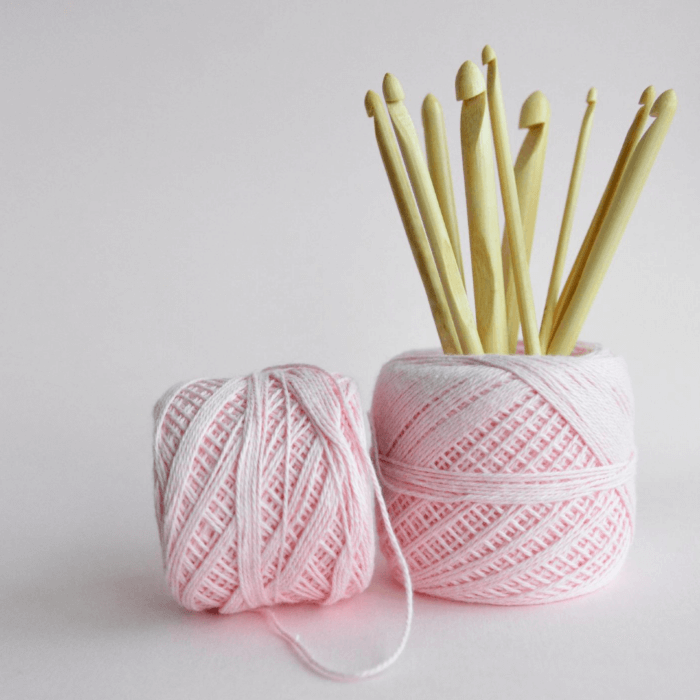
Choosing Your First Crochet Hook and Yarn
For your first practice stitches, keep things simple: choose a smooth, light-colored worsted-weight yarn and a crochet hook in the size suggested on its label. Light colors make it easier to see where to insert your hook and count your stitches.
Save fuzzy, eyelash, and very dark yarns for later. They can make it harder to see your stitches while you’re learning.
You don’t need a large hook collection or an expensive yarn purchase. One comfortable hook and one ball of yarn are enough to begin.
Types of Crochet Hooks
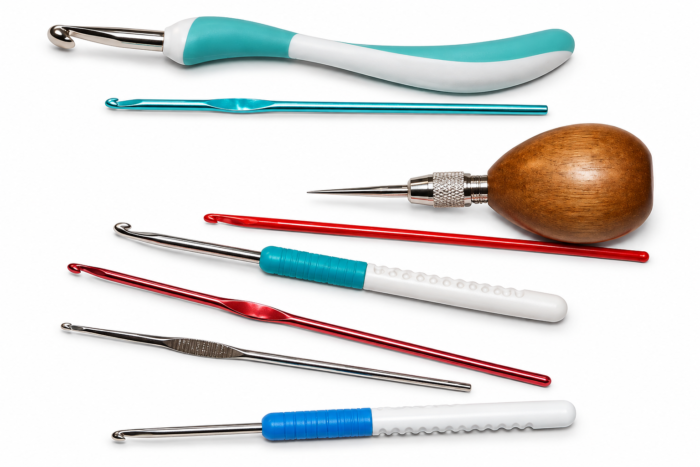
Crochet hooks come in materials such as aluminum, steel, plastic, wood, and bamboo. Some have slim handles, while others have larger cushioned or ergonomic grips.
The shape of the hook also varies. You may hear hooks described as inline or tapered, referring to differences in the head and throat. Neither style is right for everyone; the best choice is one that feels comfortable and moves easily through your yarn.
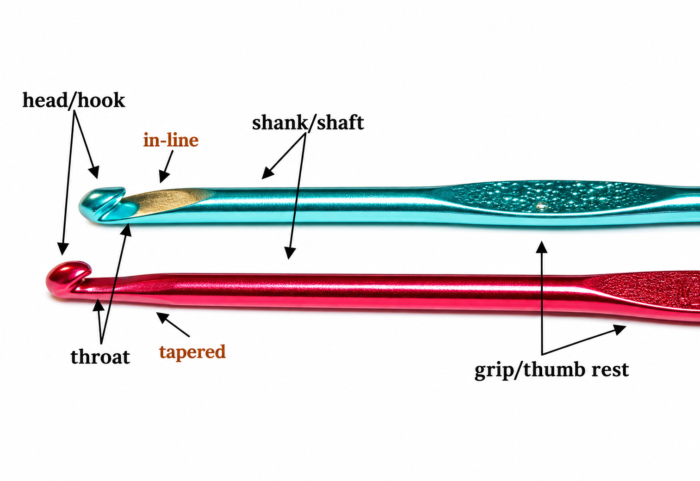
Parts of a Crochet Hook
The main parts of a crochet hook are:
- Head: The hooked tip that catches the yarn
- Throat: The area beneath the head that guides the yarn
- Shaft: The section where loops are sized
- Grip and handle: The area you hold while crocheting; its shape varies by hook
Understanding Crochet Hook Sizes
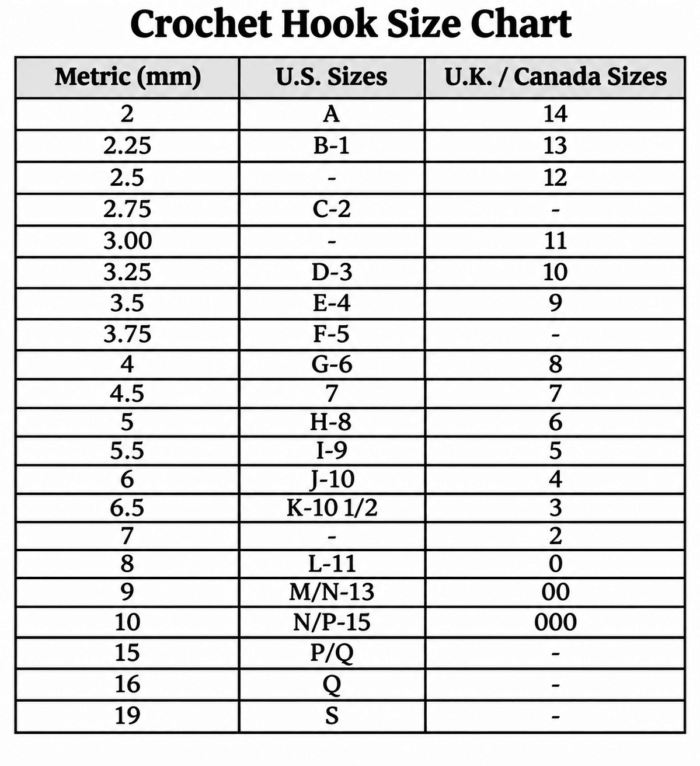
Crochet hooks are labeled by their size in millimeters (mm). Many also show a U.S. letter or number. Because these equivalents can vary between manufacturers, check the millimeter measurement when comparing hooks.
Generally, a larger hook creates larger, looser stitches, while a smaller hook creates smaller, tighter stitches.
Steel crochet hooks, commonly used with crochet thread, follow a different numbering system. You won’t need these small thread hooks for your first practice stitches.
How Do I Know Which Hook to Use?
For practice, start with the hook size suggested on your yarn label.
For a project, follow the pattern’s hook recommendation and check your gauge, especially when the finished size matters. Gauge is the number of stitches and rows within a measured area. You may need a different hook size to match the pattern—we’ll explore this in a later lesson.
Choosing Yarn for Crochet
Yarn varies in thickness, fiber, texture, and construction. Understanding these differences will help you choose supplies for both practice and finished projects.
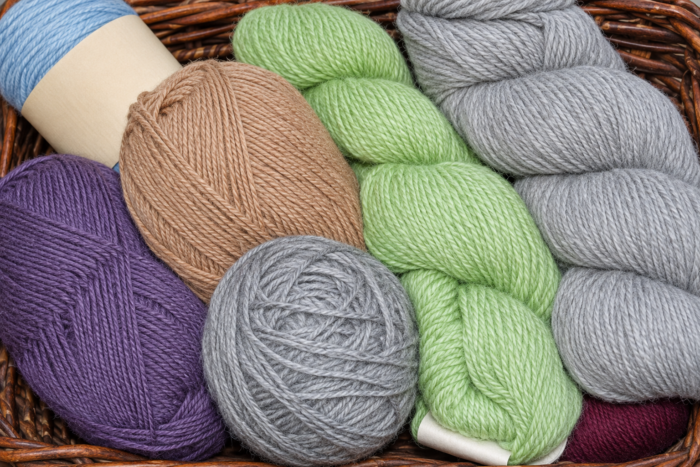
Yarn may come in balls, skeins, cakes, or hanks. A hank usually needs to be wound into a ball or cake before you begin crocheting.
Yarn Weight: How Thick Is the Yarn?
Yarn weight describes thickness, rather than how much a ball weighs on a scale. The Craft Yarn Council’s categories range from 0 Lace to 7 Jumbo.
For your first practice stitches, look for 4 Medium, often called worsted weight. Choose a smooth yarn whose individual stitches are easy to see.
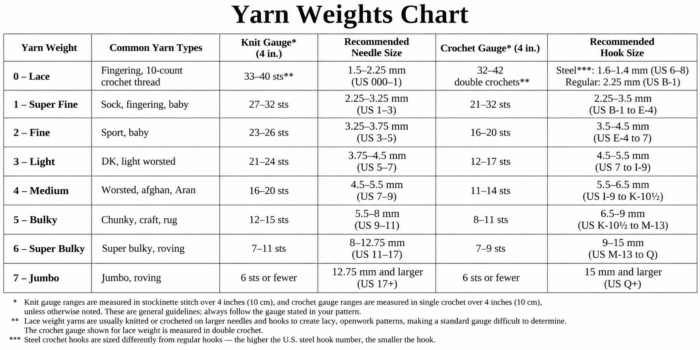
* This chart is a guideline only and reflects the most commonly used gauges and hook sizes for specific yarn categories.
** Lace weight yarns are usually crocheted on larger hooks to create lacy, openwork patterns. Accordingly, a gauge range is difficult to determine. Always follow the gauge stated in your pattern.
*** Steel crochet hooks are sized differently from regular hooks — the higher the number, the smaller the hook, which is the reverse of regular hook sizing.
Source: Craft Yarn Council’s www.YarnStandards.com
Understanding Yarn Fibers
Plant fibers: Cotton, linen, and hemp are examples of plant fibers. Cotton is a popular choice for dishcloths and other washable household projects.
Animal fibers: Wool, alpaca, mohair, cashmere, and silk offer different combinations of warmth, softness, drape, and elasticity. Their care requirements vary.
Synthetic fibers: Acrylic, polyester, and nylon are manufactured synthetic fibers. Acrylic is often an affordable option for practice and is available in many colors.
Regenerated plant-based fibers: Rayon, viscose, and lyocell are manufactured from cellulose. Some yarns labeled with bamboo as the source fall into this group.
Blends: Many yarns combine two or more fibers to achieve particular qualities.
Always read the yarn label rather than assuming that a fiber is machine washable. Even superwash wool should be cared for according to its specific label instructions.
How to Read a Yarn Label
Before buying yarn, look for:
- Fiber content
- Yarn weight
- Yardage or meterage
- Ball or skein weight
- Suggested hook size
- Gauge information
- Color and dye lot
- Washing and drying instructions
If your project needs several balls, buy enough of the same dye lot when possible to help keep the color consistent.
For help interpreting care instructions, see my Laundry Care Symbols guide and Caring for Your Hand-Knitted and Crocheted Items.
How Do I Know Which Yarn to Buy?
For practice, choose a smooth, light-colored worsted weight yarn that feels comfortable to handle.
For a pattern, start with the specified yarn weight and consider the fiber, yardage, care requirements, and gauge. Two yarns in the same weight category won’t necessarily produce identical results.
Save the yarn label so you can refer to its details as you work and when caring for the finished item.
Other Crochet Tools You’ll Need
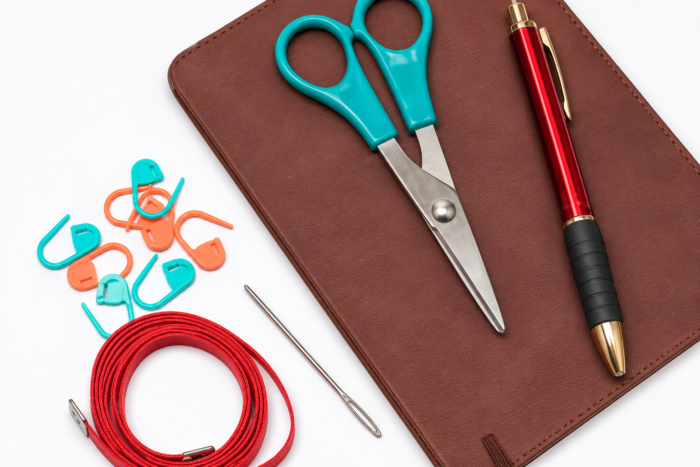
A few simple tools will help as you learn:
- Scissors
- A yarn or tapestry needle for weaving in ends
- Stitch markers
- A tape measure
- Paper and pen for notes
Removable stitch markers are particularly helpful for marking the first or last stitch of a row.
Crochet Resources to Bookmark
Keep these crochet references handy! Bookmark this lesson so you can return to the crochet hook size and yarn weight charts above whenever you need them. You may also find my Crochet Abbreviations, U.S. to U.K. Crochet Conversion Chart, and Laundry Care Symbols guide helpful as you begin making your first projects.
Ready for Your First Crochet Stitches?
You’re ready to begin with a hook, yarn, and a little patience. Your first stitches don’t need to be perfect—practice will help you become more comfortable holding the yarn and keeping an even tension.
Continue to Lesson 2 — Getting Started.

This is good stuff you are sharing.. I am a very basic at crochet, my mom thought me the chain stitch and a few hooking looking through the book.. I am so interested in your new posts about crochet..
Thanks for linking up
Love
Hani
Thanks so much for linking up this weekend @ CountryMommaCooks Link & Greet party..Great post I’ll be back because i’ve always wanted to learn how to crochet…Have a wonderful week!
Great post! I read every bit of it. I love to crochet.
I haven’t done any crocheting in years, but would love to pick it up again. I’ll have to follow your lessons! Thanks for the great info!
Okay can you tell me who make the top hook in the first picture please it would be perfect for my ma.
rrhooker88@yahoo.com
Thanks I will have to give one a try too.—Robin
That hook is an Addi swing hook. She would love it!
What a fabulous tutorial. I have always wanted to learn how to crochet. This is a great starter tutorial. Thank you for linking to Totally Tutorial Tuesdays. 🙂
Well, I am just going to have to start payng attention. I crochet free-form all the time, but I really want to learn to follow patterns. I assume you’ll get down to that at some point. I’m excited!
Free-form is so much fun!! I am hoping to get to some tutorials on following patterns in the future 🙂 Thanks for stopping by my site!
I crochet or knit daily. It is quite addicting!
I know. I love it! Thanks for stopping by my site 🙂
Yes, VERY nice and helpful intro! I haven’t crocheted for a long time. Maybe it’s time to get back into it. I do have a Viking hat pattern for a toddler that is for crochet and that might be just the incentive I need. It’s SO CUTE!
That sounds cute!! You should definitely try it out. I bet you will pick up right where you left off 🙂
Well, since I am totally adicted to scarves, maybe I should learn how to crochet! Great intro!
Thanks, Sharon!