
Knitting and crocheting can provide tremendous health benefits, both mental and physical, not to mention great pleasure. In fact, they have been shown to preserve and even improve cognitive and physical abilities as we age (see Knit and Crochet Benefits and Tips for Seniors), as well as help people heal from a myriad of conditions including depression, PTSD, schizophrenia, chronic pain conditions, and more (Crochet Saved My Life, 2012). But along with all the benefits crochet and knitting provide, we still need to be aware of some knit and crochet Health Concerns and the wear and tear it can wreak on our bodies.
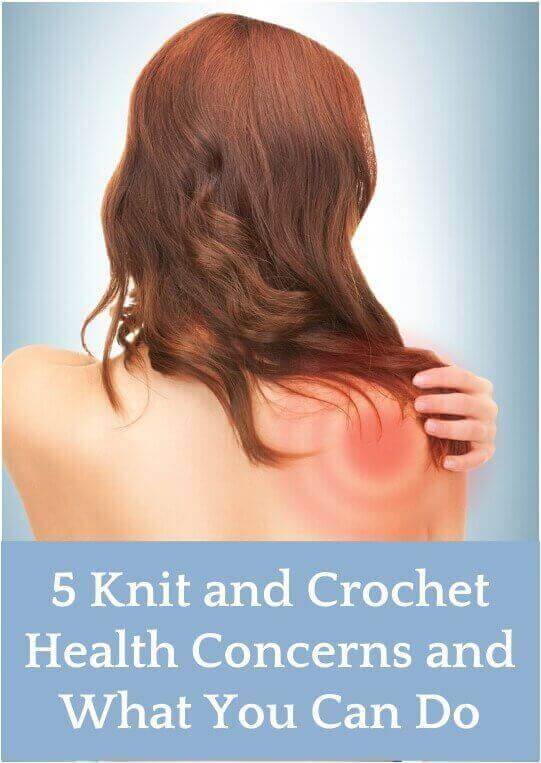
©Dolgachov via Canva.com
5 Knit and Crochet Health Concerns
In this article, we will discuss 5 common knit and crochet health concerns and what you can do to combat them:
- Carpal Tunnel Syndrome
- Neck Pain
- Back Pain
- Eye Strain
- Weight Gain
While the recommendations below can help prevent pain, if you are already experiencing pain, please be sure to check with your doctor. Working with a physical therapist or physiotherapist may help prevent further problems with your muscles, bones, and so on.
Carpal Tunnel Syndrome
Many crocheters and knitters complain about pain, numbness, or aching in the joints and tendons of their fingers and wrists. This can be caused by the repetitive hand movements involved and by the tension of holding a hook or needle. For many, this manifests as and is diagnosed as carpal tunnel syndrome or repetitive strain injury. So what can be done to help? Take frequent breaks where you put down the hook or needles and relax your hands. Do some hand stretches especially geared to help carpal tunnel and repetitive strain injury. You can try the ones in these links …
Stretching Exercises for Preventing Carpal Tunnel Syndrome
Perhaps even try an ergonomic hook to limit hand tension as you crochet. You can even make one with polymer clay as I did here. Or you can purchase an ergonomically designed hook such as the Clover Amour Crochet Hooks or the Furls Crochet Hooks. I own both and can personally vouch for their comfort!
Neck Pain and Back Pain
Sitting for too long looking down at your project can strain your muscles and lead to painful neck and back issues. It’s important to practice good posture while working. Here are some guidelines for proper positioning:
- make sure you have a comfortable chair with good back support
- place your feet flat on the floor and your knees level with or slightly higher than your hips; use a footstool if necessary
- sit up straight (no slouching! … I have trouble with that one)
- keep your elbows close to your sides and your project in your lap (I find it helpful to use pillows to prop my project up so I am not bending over so far)
Even with good positioning, you should stretch and move around at the first sign of discomfort, stiffness, or tightness. To stretch and relieve tension in your neck, tilt your head back and then side to side. Try rolling your shoulders a few times to loosen your shoulder blades and your upper back. Make it a point to get up and do something else every half hour or hour or so.
Eye Strain
Most importantly, be sure you are working under good lighting. You don’t want to be squinting at those stitches or your pattern! If lighting is a problem, people love these bendable neck lights, which can help direct light where needed. And just like when you are looking at your computer or tablet too long, keeping your eyes focused on your project for too long can lead to eye strain and even headaches. Again, frequent breaks can help. Be sure to change your focus every 20 minutes or so to something more distant … look out the window, at the TV, focus on a figurine you have in the corner. Another handy tip for reducing eye strain is photocopying your pattern at over 100%, or you can use a combo lighted around-the-neck magnifier.
Weight Gain
I love to just sit and crochet or knit and listen to my books on tape. I can do it for hours, lost in my own little blissful world. But let’s face it, crocheting and knitting are sedentary hobbies, and too much sitting zaps energy and can lead to weight gain. With my mother’s advice passed along in my head — “energy begets energy” — I remind myself to keep moving. Exercise is important for everyone, but especially for those of us who enjoy hobbies that aren’t very active. Aim for 20 to 30 minutes of brisk exercise every day. It can be a walk around the block or using a stationary bike or treadmill at the gym. Get up and get that blood pumping! And be sure to drink a lot of water to stay hydrated and keep those cravings at bay.
In addition to these tips, older adults often have additional concerns and challenges. You can read more about the specific needs of seniors in my article Knit and Crochet Benefits and Tips for Seniors.
Hopefully, with awareness about these knit and crochet health concerns and the simple tips suggested, you will be able to keep your body healthy and strong to enjoy many, many years of knitting and crocheting ahead!
Do you have any health tips to share? Feel free to comment below and share how you stay healthy.

What about shoulder pain separate from back and wrists
Wear on fingers from the wool or hook rubbing rarely happens but still does
I get sore elbows too from holding my arm in one position
Thanks for the post it really helps!
So glad you found it helpful!
Started on knitting and crochet by my great-grandma when I was 7, had to give it up for a while due to CTS caused by years of office keyboarding. Finally able to pick it back up again without my wrists/hands aching immediately. Here’s a couple of home therapy tips I got from my orthopedic specialist & the therapists. Run these ideas by your doctor first.
1) avoid “heating/icing” creams like BenGay or IcyHot, all they really do is create a chemical sensation at the skin level which does feel good but doesn’t do much else. Instead, use an anti-inflammatory cream such as Myoflex or Aspercreme (make sure you’re not allergic to aspirin first.) They also aren’t as pungent smelling, and can be used safely with a heating pad.
2) For the best benefit, use the myoflex/aspercreme right before bedtime. Slather it on, and cover with an old sock – cut the toe off or cut a hole for your thumb – then wrap a heating pad set on ‘low’ around the sock for about 10-15 minutes. The heat helps the anti-inflammatory to be absorbed better. Then, put your brace (if you use one) on over the sock and go to bed so you don’t undo the good you just did by picking up something else to work on. 😉
3) Have more than one WIP at a time with different sized hooks or needles, different gauges, different stitches, etc. to provide at least a little bit of variety in the repetition (<– my tip, not the doc's – YMMV, but I find it helps me avoid stiffness)
Thank you for the great tips!
On the upside, I crochet to relieve my mild arthritis – engaging my fingers is actually therapy!
However, the tips provided are very valid. I’m thinking about getting a stationary bike to exercise while crocheting!
I am so glad it brings you relief instead of discomfort!! And yes, a stationary bike sounds like a great idea 🙂
I’ve developed a small tear in my rotator cuff, and it is directly related to crocheting.
Excellent article, thanks. People take note of what the article says!!!
I have just had my second carpal tunnel surgery. Both worked well but are really pretty horrific and can be prevented by a few hand stretches and listening when your body says I’ve had enough of this. I was told I would never use my hands again at one point which would mean no more drawing crochet cooking gardening and all the things that make me happy. It was the worst thing I had ever had to consider. Hands are too precious to damage!
🙂
you forgot the pony ergonomic needles.. there awesome.. since i use them.. no pain anymore 🙂
Great tip. Thanks for sharing!
I enjoyed reading the article and found that I already do some of these exercises. The problem I have is that I don’t hold my hook the same way as it seems everyone else does. And I have taught my daughters to hold it the same way as I do. I learned a basic double crochet from a neighbor 27 years ago and the rest from books. I hold my hook not like a pencil, but more like a toddler would hold a spoon before being taught the correct way…lol…kind of like a little shovel. I can crochet fast and tight this way too. I have had several years off and on when I could not crochet at all…leaving me very unhappy and at times tearful!!! I am going to try the Amor Crochet hook set to see if it does help with fatigue. Does anyone else hold thier hook ‘wrong’?
I don’t think you are necessarily holding it “wrong”. Everyone settles into the grip that feels best for them 🙂
I taught myself from a book and hold my wool as you would in right hand for knitting and use right index finger to put woh. Tried the other way but tension gets extremely tight.
Mabby
I crochet exactly the same way and actually made my hand problems better doing it this way. If you want to try a different position buy some writing grips to help teach pencil control. My occupational therapist said if I could use different positions and grips to crochet with it would even out the muscle strain a little.
You are using the “overhand” method to hold your hook which is not “wrong”. There are two major ways people hold their hook and this is one of them. However there are minor differences for each person because of personal preference. For example, I hold mine in the underhand or pencil way but I also extend my little finger to support my hook.
Calling the underhand method the pencil way isn’t correct either. My brother-in-law grips his pencil between his two fingers instead of between his thumb and finger.
I read in a beading book to always have a glass of water next to you during these long hours of crafting:) then you will be getting up and going to the bathroom and stretching your legs to prevent blood clots.
Thanks for the tips, I have heard that using the old fashion metal needles does not help as they have no flexabilty in them plastic are best.